



When it doesn’t goes according to plan.

This time of year we’re surrounded by posts full of what everyone is going to change or commit to this coming year. The start of a new year is a great time to make a fresh start or recommit to something you’ve been working on. So we make plans. Grand plans for all the things we’re going to do. It starts off going well and then we hit a road block … speed bump … a grain of sand in our path that feels like a mountain to climb. Wait, what? The point is we make plans and then something comes up. What we do next is what can make or break that change we decided on.

This year we have a full two weeks off for holiday break. We weren’t travelling so I decided it was time to tackle the downstairs repainting. For a little context, we have lived in this house for almost 15 years. We painted when we moved in – light blue in the living room, grey in the kitchen and yellow in what was the playroom and has since become our master bedroom. Maybe four or five years ago I decided we should make a change and started looking at paint colors. At the time I decided to do the entire first floor in the same color. I picked out paint swatches and put them up on the walls in all of the rooms to see which one I like best. I finally landed on a color – a cool toned grey color called ‘chance of rain’ – and took all the other swatches off the walls. Fast forward to 2025 and there are the swatches still on the wall in the living room, kitchen and bedroom. Two weeks off seems like a good time to tackle this project – so I made a plan. I broke it down into the steps I needed to take – taking all the things off the walls, filling in the holes, priming some water marks on the ceilings, and painting.

Then the flu came to visit.

It started with my youngest the last few days before the break started and quickly took down my oldest. I was making tea with honey and doling out meds while still on track to tackle this project after the Christmas holiday. We made it through Christmas – I took down the decorations right away and started spackling. Then my husband started coughing … and sniffling … and running a fever. NOOOO! Now if I’m still doing this I’m on my own because he is down for the count.
So I pivot and decide to start with the kitchen and hallway so he can rest in the living room and bedroom. It takes about a day to paint the ceiling and walls. It was Tuesday and I had planned on movie with friends with my kiddo and she had some check ups – but work on Monday was ahead of me. That’s when I realize this probably isn’t going to happen the way I planned. I could have plowed through, cancelled all the activities, and done nothing else but this project for the rest of the week. But I also knew I’d be tired and frustrated and likely not doing my best work.

So I adjusted. I decided I would skip painting the bedroom. That leaves the living room walls and ceiling and some paneling in the kitchen. We went to see Zootopia 2 – super cute by the way – and a pediatrician and dentist appointment. I painted the walls in the living room – banishing my still sick husband to bedroom to avoid the fumes exacerbating his cough. It took most of the day and by the end I was toast. The ceiling might have to wait but I could paint the fireplace (old bronze to updated black). The husband started to feel better so we started putting up the paneling on the kitchen wall. We got half way through and decided to take a break and finish the next day. That night – it hit me! The body aches … the runny nose and congestion … was that a fever or a hot flash ? I don’t even know … I felt awful! Looks like it was my turn for tea with honey and meds. I pushed through the finish the paneling because you obviously can’t leave half a wall done but then I accepted that this was a complete as the project would be for now.

I looked at what I was able to do, compared to what I hoped to accomplish and made adjustments for another plan to finish the project. I will need to paint the ceilings and the bedroom and I’ll try for the long weekend coming up in January.

I’m not beating myself up over not finishing the project as planned and I’m not giving up or never finishing it. I’m accepting the progress I’ve made and adjusting the plan.

So you set a goal and you’ve made a plan and you hit a bump. How you respond and what you do next makes all the difference. Don’t give up – be flexible. If this plan isn’t working then re-evaluate and make a new plan. If that one doesn’t work then try a different angle.

Sometimes when we make plans we get stuck on the steps we laid out. Ask yourself “what is the end goal here?” and then decide if there’s a different way to get there then these steps that you’re stuck on.

As a leader, checking in often and with a variety of sources matters as you evaluate progress toward change. Feedback (and criticism – see previous post) is a source of valuable information about how something is working.

Last winter, I asked the staff I work with how they felt about tackling a revision of our report cards. I gave them a tight timeline based on the Student Management System deadlines. Everyone jumped on board and felt like we could get it done. We dedicated grade level team meetings to reviewing standards and creating indicators and at a faculty meeting I laid out everyone’s hard work to review. Then I asked – are we ready to move this forward to families? There were mixed emotions and lots of rumblings of conversation in the room.

I gave two options: 1) we move forward with this product feeling like it isn’t our best but is workable for the next year while we continue to revise or 2) we keep our current report card – knowing it doesn’t totally work for us – and spend the next year continuing the work we started here so we have a better product for the 26-27 school year. I gave some turn and talk time and then asked everyone to close their eyes for a blind vote. Yep – I use that with kids and grown ups. You know what – the room resoundingly voted to wait. They wanted time to put in more work to this product before we rolled it out to families. So we hit pause and made an adjustment – we were flexible. We didn’t quit and say this is too hard or too big a task and we can’t do it. We are learning more together this year about reporting systems and collaborating more together. Our end goal is still a new report card for 26-27 but this will be a better version that we all feel more confident in.

Sometimes, the goal doesn’t match what we want anymore and that’s okay too! Once upon a time I dreamed of becoming a 46-er. Many upstaters will know what I mean but for those who don’t – the designation is earned when you climb all 46 of the Adirondack Mountain High Peaks. I love hiking and really though this was a challenge I wanted to take on. So I made a plan and my husband and I set out to tackle our first two – the classic beginners of Cascade and Porter. Here’s the thing – the climb was a challenge and it was beautiful but I didn’t love it. I love hiking where I can enjoy my natural surroundings and the view at the end. I realized I don’t like hiking when I have to watch my footings and scramble up the bald face of a peak. I made it up to the summit of Cascade – we missed the turn for Porter on the way up and down – and then decided I didn’t really want to be a 46-er. I just wanted to hike pretty trails and have beautiful views to enjoy. So I set a goal, made a plan, and started working toward the goal. Then I realized that goal didn’t actually fit what I wanted anymore – so I quit.

As you are looking at your goals for this coming year or refreshing the ones you set in September as school started, ask yourself what’s working and what isn’t. Check in with those you lead and ask them those questions. Listen to the feedback – direct and indirect – and dig into what the unmet need is. Then decide – does this plan still work for the goal we set out to accomplish? Does it need a little adjustment or a lot of adjustment? Is this a goal you still have or is it time to move on?

What goals are you taking with you into the new year? How can you be flexible as you plan to achieve them?

The gift of criticism

I had an opportunity this past week to embrace criticism as part of the change process. It was not an easy experience but it was a necessary one. So you may have read this title and scoffed that criticism is gift? really? You may even be thinking I’ve lost my marbles in this season of holiday chaos and school activities. But hear me out – sometimes the most challenging situations or experience are those that are most necessary for real change to occur. You may have heard the expression a seed has to crack open before the plant can grow. Well this week I had a real growth opportunity and, as a leader, how I responded in the moment set a tone for challenge and change with my entire staff.

Our school is at the beginning of a new curriculum implementation. During our monthly faculty meeting this week, staff were critical of the curriculum and the teacher and student experience thus far. They shared some of the challenges they are experiencing and asked some difficult questions. I was in the hot seat for sure! My stomach started to feel icky. My heart dropped a bit. I got a little extra fidgety with my watch band. My thoughts were racing about how to respond and what should I say and why are they asking about this and where did that idea come from … It was uncomfortable.

Here’s the thing – change is uncomfortable. Doing new things that position you as a learner and not an expert is uncomfortable. As the leader, I have to be willing to be uncomfortable especially when I’m asking my staff to work through being uncomfortable as they try something new. Those who asked difficult questions took a big risk in sharing their challenges and vulnerability. This was an opportunity for me to reinforce that we are a community of learners who work together to do hard things. As I reflected on the experience there are a few things that stand out to me as crucial for framing this critique as a gift and not an obstacle.

Give room for staff voice

Reviewing feedback on the new curriculum was not on the faculty meeting agenda this month. The conversation came organically out of a mid-year goal review. I could have redirected or shut down the conversation. I could have said that this wasn’t the time for the conversation. What message does that send to staff?

Community is one of my core values. A professional community where we collaborate and learn together means that everyone has a voice and contributes – even if it isn’t always sunshine and rainbows.

Sit in the uncomfortable feelings

Acknowledge the feelings that come along with negative feedback. It doesn’t feel good and it isn’t easy. But in that moment if I am angry or defensive that doesn’t move the team forward. Take it seriously but don’t take it personally. Really listen to what is being communicated rather than to formulate your next response.

Identify the unmet need

I truly believe that people come to work each day to give the best they have. If there are complaints or criticism they are communicating an unmet need. Approach criticism with curiosity. What is the underlying issue here? Do the staff need more time or clarity? Is there a lack of understanding or expertise? What specifically is leading to their discomfort with this thing?

Take action

Giving voice to criticism, embracing discomfort, and staying curious are important but if you don’t address the issue, if you don’t take action to meet the underlying need, you won’t move forward. Criticism should be met with transparent communication and follow up. I hear what you’re saying, here’s what we’re going to do about it. Be clear about the plan for implementation and feedback. Be willing to adjust the plans in response to feedback.

Receiving criticism can be difficult. It doesn’t feel good in the moment but focus on the long game and it can be a gift that creates opportunities for your team to embrace change and keep moving forward.

How do you approach criticism or negative feedback? Do you have a strategy that works for your team?

Humanity in leadership

I was recently listening to Brene Brown’s latest book, Strong Ground1, and was reminded about the distinction between managers and leaders:

Managing is a craft — the art of structure, consistency, and execution.
Leading is a craft — the art of vision, alignment, and inspiration.

Both are necessary for organizations and I think you need to be both especially in educational leadership where we wear so many different hats. What has been sticking with me lately is that we can easily get stuck focusing on managing and not ever get the opportunity to shift into leading – especially when it comes to people.

As a building leader, I am in a people business. Whether we’re talking about kids or adults, human beings are at the heart of what I do every single day. Yet sometimes in leadership we can lose sight of that humanity when focused on the operations and management of daily life.

A staff member comes into the office in the afternoon, visibly upset, and asks to leave mentioning something about needing to get to the vet and bad news. They still have an hour of classes left.

At the end of a long school day, you receive a radio call from a bus driver that there isn’t anyone out to get a student off the bus. The transportation office gets a hold of a parent who communicates there was a family mix up and the person who was supposed to be there won’t be. The kiddo is brought back to school and the parent can’t pick up for at least an hour – that’s almost two hours past the regular dismissal time.

A staff member had an injury that requires physical therapy and they are worried about taking off a ton of time for the appointments.

A staff member has a sick family member who has been hospitalized. They had planned to take the afternoon off when the family member was being released to transport them home but the doctor called and they were being released that morning instead.

In each of these situations there is a decision to made about how to show up in the way I address them. How I show up impacts the way people feel about being part of my school community and how they view me. Do I address situations in black and white ways? Can I be easily manipulated by pulling on heart strings? What do I value and emphasize? How I show up in these daily decisions matters.

I choose to stay connected to the humanity of being in the people business while also being grounded in data of the situations.

But let’s be clear – being a good human doesn’t mean I am a pushover.

Each situation requires intentional decision making.

The parent who had mix up with the family pick up arrangement might be having a really difficult day and their village didn’t show up to support them. Now they’re scrambling to pick up their student and they’re over an hour away for work. Being scolded by the principal about pick up times and reminded about the dismissal time doesn’t help in this situation. However, what is the data here also – is this the first time this has happened with the family or fifth? If it’s the first time, being flexible and giving them grace in a potentially tough situation makes sense. If it’s the fifth time, acknowledge the pattern, offer support, and explain the protocols. Following up with the family the next day to discuss barriers and solutions to prevent this from happening sends a message that we’re here to help but we’re also holding you accountable to figure this out.

Medical issues with family members, human or animal, can be approached the same way. Have a list of people who can be available to cover classes in the event of staff emergencies can be helpful in the moment when you need to flex quickly. Are those same people options for coverage for people who can get early morning or late afternoon appointments? In the moment, see the human in front of you. Someone who just got really bad news about a beloved pet. A child struggling to care for an aging parent. Someone who’s hurting and trying to manage pain and recovery alongside working.

Just like with the family pick up example, recognize the difficult situation and also check the data. Is this the first time or fifth time? Does this staff member always seem to schedule those later afternoon appointments for Friday or early appointments on Monday? Is this a rare occurrence or a weekly occurrence? When the data show us patterns, we have an opportunity to offer additional support. Pull in that staff member at another time and discuss the pattern with them. You are acknowledging the difficulty but also bringing awareness to the impact on operations and can problem solve. In my experience, the majority of these situations that pop up are rare occurrences for the staff member. Giving them grace and allowing them the time they need to address things show staff you value them as people not just as positions.

Creating a culture where people matter starts with the intentional decisions we make that show people they matter. If we truly want to put students at the center of everything we do then as leaders we need to put the people who support our students at the center of what we do.

You can be a good human and not be a pushover!
  1. https://brenebrown.com/book/strong-ground/ ↩︎

You can be grateful and …

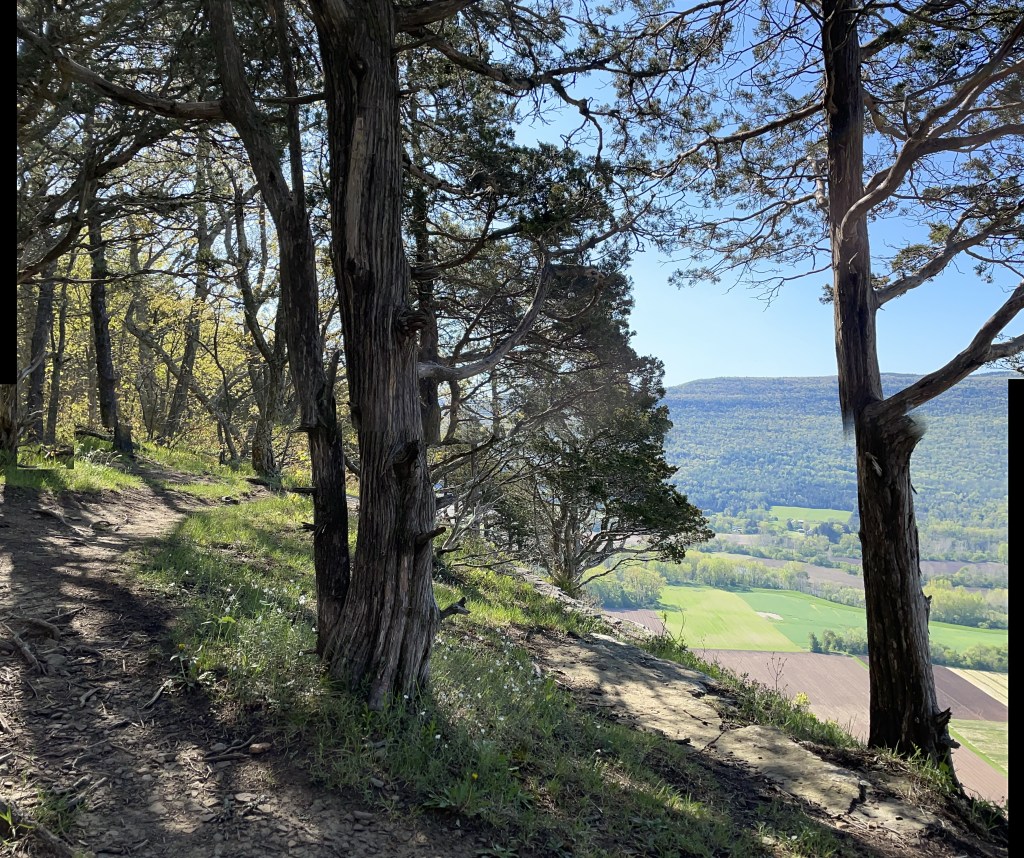
Vrooman’s Nose, Schoharie County, NY

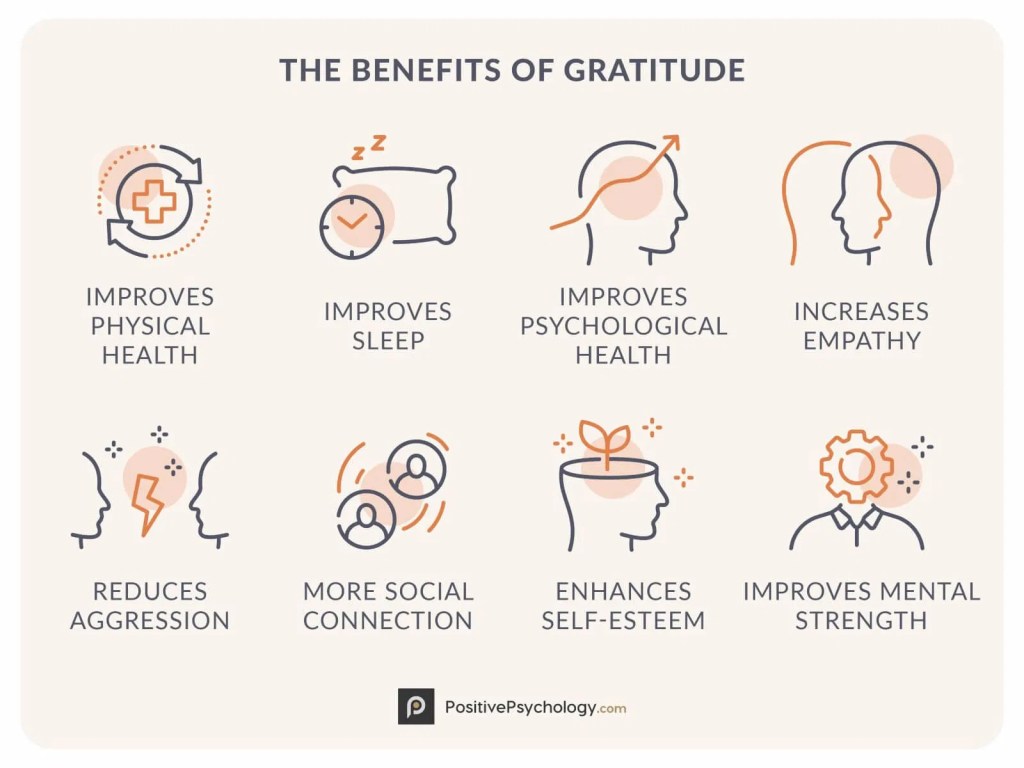
This time of year brings about many posts about gratitude and what we’re thankful for. I’ll admit American Thanksgiving is one of my most favorite holidays. It’s focus remains mostly on expressing gratitude and spending time with loved ones – whether they are friends or family. It is also a season where many focus on service and giving back to their communities. I love all of these things about this season and regularly practicing gratitude is proven to have many benefits.

https://positivepsychology.com/benefits-of-gratitude/

So I am definitely on team grateful! Having a mindset of gratitude has so many benefits. If you don’t already have a regular gratitude practice, I highly recommend taking two minutes a day to reflect on something you are grateful for.

Where I get stuck is the narrative around being grateful despite or instead of other valid feelings and responses. As a kid the common response to not wanting what was served for dinner was “you should be thankful you have food, there are children starving in [insert any number of other places beside my family’s kitchen table].” When you wanted the trending sneakers or jeans the response sounded like “there are kids who don’t have warm clothes to wear so you should be thankful with what you have.” As a child of the 80s and 90s, this was parents way of trying to combat the rising consumerism and marketing directly to kids. They wanted to teach us that what we had was fine and we didn’t need the next new thing. As a parent now, this is a lesson I also want to impart on my own children and find it incredibly challenging given the marketing engine all around them.

I see the remnants of these messages in the way gratitude is leveraged in adulthood as well. “You should be happy you have a job.” “Some people don’t have __________ so you should be grateful you do.”

These statements on the surface don’t seem all that bad – I am fortunate to have a job and access to clean water and heat for my home. The problem is that when we use these statements as a way to minimize our feelings or frustrations. Complaining about having to do another load of laundry when you’re tired? You should be grateful you have access to laundry in your home. Dissatisfied with an element of you job? You should be grateful you have a job. Feeling stressed about getting dinner on the table before the evening activities? You should be grateful you have food to put on the table. All of these pushes toward gratitude may seem like reframing negative thoughts into positive ones but in reality they usually bring more negative thoughts. When gratitude comes along with shame, there is a problem. Let’s normalize that we can feel grateful and other emotions at the same time.

You can be grateful and frustrated.

You can be grateful and sad.

You can be grateful and angry.

You can be grateful and ______ fill in the blank here for you.

Begin grateful or having an attitude of gratitude doesn’t mean that you don’t have permission to also feel so many other things too and that is where I think many people miss the mark.

I enjoy writing and sharing ideas with you all through this blog. I do not always enjoy getting up early on the weekend when everyone else in my house is still asleep to write. I get to decide where I want my thoughts to hang out and what is the most productive for me in that moment. I know I want to build a business for consulting when I retire from the public schools. Having a social media presence can help with that and sharing through this blog is part of that.

Finding a way to fit writing into an already full life means carving out time when I could be doing other things. So while I didn’t want to get up this morning to write, I knew I had a good reason to and dragged myself out of bed. The bonus, I got to see the prettiest sunrise from my seat in the living room.

It is okay to be annoyed about getting up early and at the same time grateful to see such beauty in the world. These things can coexist without judgement or shame.

When you find yourself tempering you feelings with statements that start with “I should feel …” STOP! You get to feel however you are feeling. Then think about what is helpful in that moment.

I get to feel frustrated that there is another load of laundry to be done and no one helps. Are my kids old enough to be taught how to do their own? (spoiler alert – we taught our kids to use the washer and dryer around 7 or 8).

I get to feel decision fatigue after an entire day of principal-ing (or teaching or insert job). Deciding what’s for dinner and making dinner can feel like too much. Give yourself grace – cereal for dinner is still a dinner even if it doesn’t hit all the food groups. There’s no right way to feed your family so don’t let social media tell you that if you don’t have a perfectly packed lunch with cute containers and a seasonal toothpick or note then you aren’t really taking care of your family. A granola bar and water bottle in the backpack and buying school lunch is just a good. Same with dinner. If cooking for your family genuinely makes you happy – great! How can you set yourself for less stress here. Meal planning and prepping on the weekend when you grocery shop is one way. Writing the weekly dinners on the calendar or on the fridge so you don’t have to make a decision about what to cook when you get home is another way. Choose a night or two where you kids make dinner or you order take out also. You can be thankful to have access to food and thankful you have the skills for cooking and still not want to make dinner – set yourself up for success in different ways. Hate cooking and don’t want to even have to think about it? Okay. There’s no judgement there either. You can be thankful you have access to food that others prepare for you and your family. Ordering pizza and wings? add extra celery and carrots to the wing order – yay veggies! Look into premade or prepackaged options at your local grocery store or market. It’s okay to let someone else do the cooking.

The main idea here is you get to feel overwhelmed or frustrated or exhausted or whatever you feel. Then you need to decide what you want to do about it – what works for you. Don’t let “should” take up too much space in your brain. I should do this. I should want to do that or have that or make that. Why? Who says? I am thankful for the beautiful sunrise this morning doesn’t have to mean I should enjoy getting up early to write. It doesn’t. But I am thankful for this platform and the opportunity to share my thoughts with you. I get to choose to focus on that.

Don’t let gratitude stay married to shame. You can be grateful AND you can be an other number of feelings. You decide where you want to put your energy and thoughts. Let’s normalize feeling grateful and.

Leading Change

As we continue to explore change in this series, there are important components to address if you are leading the change. Helping those around you to embrace the change (see previous post Embracing Change) can require an additional set of skills or strategies. I want to be clear that you can be the leader of change because of a title (building principal or director of curriculum) but you may also be the leader of change because of your position or influence among the group. Either way, these tips can help you navigate your team through a change.

  • Be clear on what the change is and why it is needed

Before you implement anything new it is important to really reflect on why a change is needed and connect to the bigger picture. Be super clear from the onset what the problem is that the change addresses and how it helps the organization’s mission. Don’t just think about this one – talk about it with your team and write it down. This will keep you focused as you develop a plan and address challenges.

  • Make a Plan

This one may seem like an obvious one but is an important component of any change. Making a plan means taking the time to think through the things that will come up and how you will address them. The first step in making the plan is one of the most important – Find your team! We may be leading the change but we don’t have to do it alone. Think about what your strengths are and be honest with yourself about what is not your strength. Try to build balance in your team. Don’t just fill your team with people who agree with you. Having input from a wide variety of people helps prevent blind spots in your plan.

Once you’ve assembled your team, it’s time to take a look at what you are de-implementing to make room for this new thing. This is an important step in planning that many people over look but can have a huge impact on the success of something new. Anytime we want to add something new we have to look closely at how we are going to make room for that by deciding what to take away. Maybe this is an easy one because what you are implementing is replacing something old or outdated so you’re taking away the old stuff and putting in something new. I would caution you that replacing the old with the new may not be enough de-implementing to make way for a successful change. When we look at cognitive load theory, we see that the brain can only process a finite amount of information at a time, typically five to seven chunks of information. Anything more than that leads to cognitive overload. An old program or process is familiar to people and is likely being accessed from long-term memory. What this means is that we are not using a lot of working memory to complete these task which lessens the cognitive load. Replacing that old program or process introduces new components, frameworks, and/or lesson structures that use working memory to process and learn in addition to the content itself. This is more taxing on available cognitive function that the old material was. It is important we take that into account when deciding what to take away to make room for something new. Replace something old doesn’t mean that the impact is an even swap. Consider what else you can take off someone’s plate to make more room for the processing and learning required of something new.

Now that we’ve put together our team and made room for something new, we can be begin to plan specifically for the new changes. Here are a few questions to consider with your team:

  • What is the goal or target for [insert time frame]?
  • What do people need to meet that goal?
    • Specific materials? Time? Coaching?
  • How will we get people what they need?
    • plan for release time or sub coverage? budgeting for materials?
  • What will we use to monitor progress? How often? By who?
  • How will we gather feedback?

Answering these questions will get you started but know that the plan you create with your team is a living document – it will need to be flexible and adaptable as you work through successes and challenges of the change.

  • Give positive feedback and encouragement often!

Change is uncomfortable and trying something new can be vulnerable. People may feel judged when you check in and see how things are going even if you have the best of intentions. Giving a lot of encouragement and positive feedback, especially at the beginning, helps build a safe space to take risks and try out something different. This doesn’t have to be a grand gesture. It can be small things done frequently to let people know you’ve got their backs. Leaving a sticky note on their desk before you leave the room acknowledging one thing you saw they were trying out. Nothing fancy or overly complicated. “I noticed you using [insert initiative here] with your students today. Keep it up!” “Thank you for trying out _____ today. It looks like your students were really engaged in it.” Especially at the beginning, this is not the space for constructive feedback. This is all positive – you are building the safe space where people will be willing to take risks and try new things.

  • Be a good listener

You identified a problem and came up with a plan to address it with your team. You’ve talked through and made arrangements for all sorts of challenges, removed potential barriers, and planned for support. You’ve put a lot of effort into setting your team up for success with this change. Here’s the thing – you’re not done. You don’t just hit play on these plans and watch the successful implementation of the change play out in front of you. Inevitably there is a glitch, something you didn’t plan for or anticipate. This is expected. How we take in the information and use it can make or break our change plans which is why it is so important to be a good listener when leading something new.

People are always giving us feedback even if they aren’t filling out our fancy survey or completing the exit ticket. Sometimes it shows up in anticipated ways – people ask questions or offer suggestions, they fill out the comment section on the feedback survey. Sometimes it shows up in way we didn’t plan for – complaints at the copy machine, a group email or text thread, comments during a meeting. When we are leading a change, we have be willing to accept feedback even if doesn’t show up in the ways we planned for. Being a good listener also means we have to work to not take things personally. Complaints at the copy machine are information we can use. It doesn’t mean they hate you. They are sharing that they don’t feel comfortable with something – remember change is uncomfortable. This is an opportunity for reflection – have I address this area of discomfort and this person is just working through it or is this something we didn’t plan for and an opportunity for us to address a need?

Hearing people isn’t where this ends. Yes, sometimes when people complain they just need to feel heard when something is hard. Sometimes when people complain it is an indication that something needs to be adjusted or modified. We can be good listeners but we also have to act on the feedback we receive. If you’re going to send out a feedback survey, make sure you share the results of the survey AND what you’re doing as a result of that information. Let’s be clear, that doesn’t mean that every complaint means we changing the plans. That means we are taking in that information, comparing it against our goals/targets and deciding how to support people in that area. This could be making an adjustment to something – adding a planning meeting or identifying a coaching need. This could mean staying the course – that is a problem or need that is going to be resolved or addressed at this future point in the implementation plan. Most importantly – don’t send a survey out if you don’t have a plan to look at and use the results.

Change is hard – how we lead change can make it feel less hard for us and those we lead. Be curious and keep moving forward!

“Around here, however, we don’t look backwards for very long. We keep moving forward, opening up new doors and doing new things, because we’re curious … and curiosity keeps leading us down new paths.”

Walt Disney’s Meet the Robinsons (2007)

Many shades of progress

As we dig into this series on change, it seems necessary to me to take a bit of a detour and talk about progress. I don’t know about you but I am a recovering “all or nothing” person. For decades I have tried to set goals and make plans and change all at once.

Who else can relate to trying a new “diet” that included cleaning out your fridge and pantry of all the junk, making a super detailed meal plan, grocery shopping and prepping? Did you also do what I typically do and follow the plan maybe the first day and half or so and then life happens. You had to stay late at a meeting so you don’t have time to make that dinner you planned. You packed a lunch that had to be heated up and the only heat at lunchtime came from the dumpster fire you were putting out not your microwave. You planned a recipe that seemed like a good idea when you read about it but now that you’re sitting in front of cold pea soup it really just makes you want to gag.

Maybe your goals have been around a fitness routine. You buy the sneakers or the gym membership. You pick out the classes you’re going to take. You even set your alarm for 4:30am. But wow, 4:30 is super early! And you had to stay up late last night grading those papers or at you kid’s soccer match or <insert other reasons here> … we could keep going – many of us have been there and can relate.

We have something we want to change – something that doesn’t work for us. You did the first step and identified something that doesn’t work for you – whether it’s how you take care of you body (eating or exercise) or how you teach reading (hello, structured literacy) or how you show up at meetings (let’s focus on the data). The first thing we have to do with any change is first identify a problem and decide there’s something we are going to change.

In my previous posts I mention giving yourself grace a few times. When we assess how things are going, giving ourselves grace is critical as we look at the progress we are making with the long game in mind. Very often we review our progress toward a goal focused on the short game – this week or sometimes just today. We said we were going to work out 5 days this week and we only did it two times. We planned a week’s worth of healthy lunches but we only ate lunch 3 of the 5 days. We wanted to give positive notes to all of our students every month but we only managed to do it in September.

Making progress toward a goal isn’t always linear. In our planning we may think of the milestones we plan to hit along the way to our end goal and see that happening in a straight line. However, change rarely happens that way. The key to sticking with the process it to keep going. Changing anything takes times and if we are changing a habit or pattern that we’ve had for many, many years, we have to accept that it will take a while to rewrite that pattern.

What we created in 30 years won’t be rewritten in 30 days.

This is where the grace comes in and we have to look at shades of progress. I mentioned that I am a recovering “all or nothing” person. I am still working hard to reshape the thinking that pops up for me around making change. Remember in my last post I mentioned that pesky brain wanting to maintain homeostasis and change sets of all kinds of alarms. You brain fires off all sorts of messages to you in hopes that you’ll give up and go back to the comfortable and familiar way it knows.

“See, you didn’t really want to do this anyway”

“you can’t commit to anything, you should just give up now”

“I don’t know why you thought you could do this”

“Is this really how you want to ____ for the rest of your life?”

“You didn’t do all the _____ so why bother doing this one?”

Insert whatever thought comes up for you here – they are all attempts from your brain to stop you from creating change. Any they are nonsense! You decided that you wanted to make a change for a reason. You identified a problem, something that didn’t work, and decided to do something about it. Good for you! So remind yourself why you decided to make this change in the first place. Your reasons are valid and they matter.

“Around here, however, we don’t look backwards for very long. We keep moving forward, opening up new doors and doing new things, because we’re curious … and curiosity keeps leading us down new paths.”

Walt Disney’s Meet the RObinsons (2007)

So if we are going to keep moving forward we have to recognize and celebrate the progress we are making – especially when it doesn’t match up to idea we had in our head of how this would go. Some of the most beautiful places in our country were not created overnight. The slow, steady wearing away of layers of the earth over many, many years created these masterpieces. What we stare at in awe today was created little by little. Small increments of progress over time. This is the long game.

So what does progress look like for the change you are making?

I wrote earlier about how I started running this past summer. I picked a training program and 5K goal race. I showed up every week and did the things and ran the race. Even after the school year had started and things got a little busy I still showed up and did the training runs. Since that 5K, I haven’t been showing up as consistently. I have run three other races since then – thanks to my husband who keeps registering us for them! I have shown up on the treadmill sometimes 3 runs a week sometimes zero runs a week. I set my alarm to get up early and over the last month, I haven’t gotten up one time to do that early workout. I reset it for later, hit the snooze a whole bunch, or lately I just set it for later the night before and don’t bother.

But here’s the kicker – progress isn’t linear. I only started working toward this goal maybe 90 days ago, maybe a little longer. So while I’m not perfectly showing up every morning when the alarm goes off, I am still showing up. I playing for the long game which is to be stronger and healthy so I can keep doing the things I love, like hiking, for many many years to come. So am I perfect? Of course not! Progress for me last week looked like lacing up my sneakers once and going for that run. The week before, it looked like showing up at the starting line for the race we’d registered for, even though I hadn’t run at all (not even once) in the two weeks since the last race. Progress felt like being able to participate in a charity basketball game at work this week and not feel like I was going to die as I jogged back and forth on the court in front of a packed gym. That’s a big win for me! This week, progress will look different too.

Progress looks different all the time. Just like in the photos from the National Parks in Utah and Arizona. Sometimes the water or wind eroded large layers of earth quickly, sometimes the layer it cleared is smaller, each progression toward change shaped these beautiful ravines, caves, and arches. So we keep moving forward, we don’t give up on the end goal – we’re in this for the long game.

Embracing Change

Sometimes embracing change can feel like being asked to hug a porcupine. In my previous post, I mentioned that change is natural and part of life but that our brain doesn’t always see it that way. In an effort to maintain balance, the brain tends to freak out. Here are some strategies that can help you ride that wave of emotions to embrace the change.

  • Mindset Matters

This isn’t the first time I’ve written about how we think about something makes a difference (see previous post “it isn’t always easy“). The way we talk to ourself about something makes a difference in how we perceive it. This isn’t just my own personal experience talking here either.

Researchers at the University of Virginia tested this out. Reiner and colleagues1 found that if you are in a negative state of mind when looking at a hill you have to climb you perceive that hill to be 30% steeper than if you in a positive state of mind.

When approaching a change, whether its developing a new running habit or implementing a new curriculum in your classroom, your mindset matters and can show up in how you talk to yourself. When I started running again, I battled those thoughts: I’m not a runner, who did I think I was to try this in my mid-40s, I can’t make it that far. When we try out new curriculum, we battle those thoughts: I should be able to do this, my students are going to think I don’t know what I’m doing, why can’t I figure this out, that lesson was a flop I can’t do this right. Think about how you can flip those thoughts to a more positive mindset. That lesson was a flop – if we try it again tomorrow my students will see that we are all learning. This is new to me, it’s okay that I don’t have all the answers right now. It doesn’t have to be perfect!

  • Find your Team

Taking on something new can be easier when we have a group around us. This could be a physical team of colleagues all learning the same curriculum or a virtual group supporting your implementation. When I started running, my team was the group of Peloton coaches in the 5K program. They showed up with me on the treadmill and offered support and encouragement I didn’t have if I was lacing up my sneakers and hitting the pavement alone. On that first race day, I had my family with me. Even if we didn’t run together, I knew they were waiting for me at the finish line and cheering me on the whole way.

Those researchers who showed us that mindset matters also looked at this. You know what they found? We perceive that hill we have to climb as 20% steeper when we are alone compared to when we have someone with us2. Having a team with us helps us see a task as less challenging.

This shouldn’t be too surprising. Tackling a new curriculum when you have a grade level team to bounce ideas off of or share the workload by dividing up who makes the slides can help. If you don’t have a physical team with you, there are lots of ways to find a team. Is there another local school implementing the same curriculum? You could reach out to those teachers and collaborate. Is there an online forum for this you can join to gather ideas and share challenges? Teachers on social media can be a wonderful resource and support!

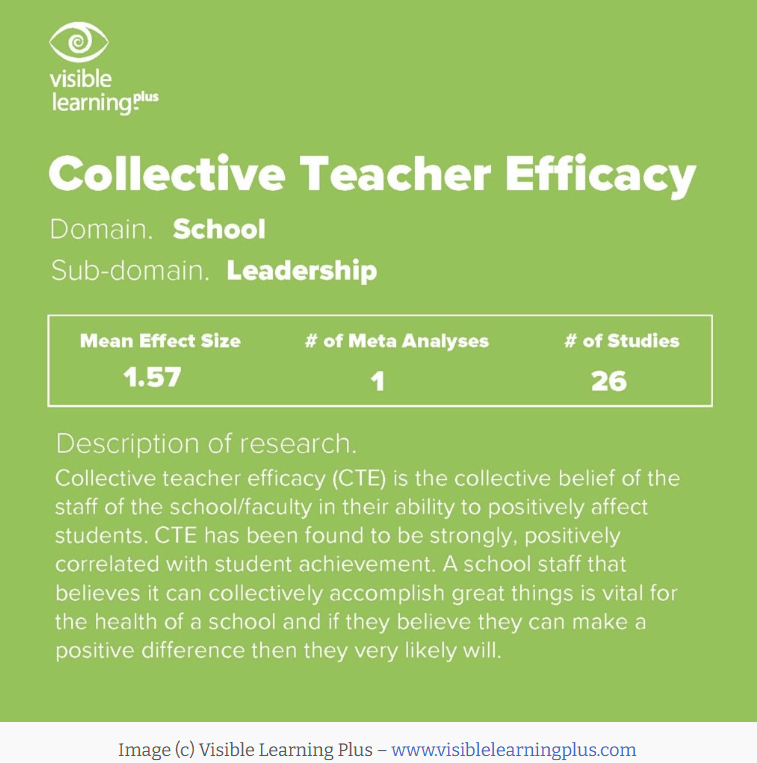
Research also shows us that putting mindset and team work together has a significant impact on student outcomes. John Hattie has looked at the impact of a wide variety of strategies over his career. He identified anything with an effect size of 0.4 or greater as having a positive impact . Collective teacher efficacy blows everything out of the water with an effect size of 1.57!!

  • Reflect and Revise

Anytime you are trying something new or different, it is important to take time and reflect on what is working and what isn’t working. Evaluating and revising your plan can help you stay focused and on track.

Watch your mindset as you reflect on what’s working. Remember that even the most accomplished people were beginners once. Remind yourself that it is okay to not know all the answers right now as you are learning.

Celebrate the wins you do have – big and small! You got all the way through the lesson you planned today during your ELA block – woohoo! You remembered to include the vocabulary chunks in this week’s slide deck – Yes! All but 2 of your students were actually on topic during the turn and talk today – amazing!! Keep that positive momentum going while still focusing on the big picture.

As you move through a change, continue to ground yourself in the bigger picture also. Why are you making this change? What is the outcome you are looking for? The initial response may be – because my district said we had to. Okay. Now think about the reasoning why (hopefully they’ve shared that with you also). We are implementing a new knowledge based curriculum to improve student reading and writing outcomes. We are building a running habit because we want to feel like we can keep up and be stronger. It sounds cliche but remembering the “why” behind the change can be helpful in the moments when it feels too hard to keep going.

It can also be helpful when you are in the midst of a change to think about the timeline for the change. When we see changes in others, especially online, we can feel like things should happen overnight. In reality change takes time. Depending on what kind of change we’re talking about it can take a lot of time. Building a new habit can easily take 60 days but sometimes can take a lot longer. Implementing a new curriculum takes at least three years sometimes five. When building a new habit or practice, especially ones that replace something we’ve been doing for a long time, we have to give it time. We didn’t build the old practice overnight so we certainly aren’t going to solidify the new one overnight.

Along those same lines, we can’t change everything all at once. I am definitely guilty of having an all or nothing mindset when it comes to building new practices. Committing to small changes over time add up to bigger changes in the long run.

Implementing a new curriculum? Start with learning the format of the unit and lesson. Commit to teaching the lessons everyday and focus on that first. This may be the first year of implementation. Then in year two, you’ve established a firm foundation in the lessons, now let’s focus on scaffolding and differentiation in the tier 1 curriculum.

Want to run a marathon? Start by walking everyday and then commit to a 5K training program. Build a solid foundation of 5K miles over time. This could take six months or longer if you haven’t been working out at all.

  • Keep Moving Forward

It’s okay to not love every minute of something new. It’s okay to have doubts and wonder if you’re doing something right. It’s okay to not feel like an expert or feel like you’re fumbling through. Just keep moving forward. The path may be steep but the view from the top is totally worth it!

“Around here, however, we don’t look backwards for very long. We keep moving forward, opening up new doors and doing new things, because we’re curious … and curiosity keeps leading us down new paths.”

Walt Disney’s Meet the RObinsons (2007)
  1. Riener, C. R., Stefanucci, J. K., Proffitt, D. R., & Clore, G. (2010). An effect of mood on the perception of geographical slant. Cognition and Emotion, 25(1), 174–182. https://doi.org/10.1080/02699931003738026
    ↩︎
  2. Schnall, S. Harber, K. D., Stefanucci, J. K., & Proffitt, D. R. (2008).  Social support and the perception of geographical slant.  Journal of Experimental Social Psychology, (44)5, 1246-1255.  https://doi.org/10.1016/j.jesp.2008.04.011.
    ↩︎

Change Happens

It feels fitting to write about change this time of year. Here in Upstate New York, the leaves are making their colorful transition from green to many shades of yellow, orange, and red. It is a stunning seasonal gift we receive just before the cold of winter sets in.

Change is a natural as the shifting seasons. The Ancient Greek philosopher, Heraclitus, is often credited with the quote, “the only constant in life is change.” Change happens. All the time. So why does it seem like it’s so hard?

“The only constant in life is change.”

Heraclitus, greek philosopher

Homeostasis, according Merriam-Webster’s online dictionary, is “a relatively stable state of equilibrium.” The brain and body are wired to try and find this stable state and maintain it. When something is changing, your brain freaks out because it feels or perceives something out of balance. This can make change feel hard. Whether it is a new exercise routine, a different instructor in your favorite class, a new curriculum in your classroom, a new team member in your department or grade level, or any number of changes, big or small, that we encounter all the time, the brain perceives this imbalance as bad. Your brain wants to keep things stable.

But change is necessary and natural. So despite your brain wanting to keep things the same, we need to change, to grow. Over the next few posts I’ll be digging into how we can navigate change as an opportunity and share some strategies for riding the wave of panic from your brain and embracing the new.

Today I’m embracing change by enjoying the changing seasons from Vroman’s Nose in Schoharie County. The colors from the sunrise added another layer of beauty to an already gorgeous landscape.

It isn’t always easy.

Here in New York, we’ve been in school for a little more than 2 weeks. I don’t about you but this is about the time the new school year energy starts to wear off. The everything’s new and exciting shine has faded a little. There might even already be a stain on your new classroom carpet or a peeling letter to two on your Pinterest-worthy back-to-school board. Maybe you’re even starting to feel the weight of a to-do list that keeps growing or a particularly challenging student concern.

I’ve definitely been there – starting to feel buried under the job when we’ve just started And if you’re anything like me, that’s also when my brain starts chiming in with all sorts of negative chatter. I’m so disorganized. I need to have a better system for that. If I was better at _____________, then this wouldn’t happen like that. More experienced leaders would know how to handle this. Who do I think I am anyway. This group is going to see right through me and realize I don’t have any idea what I’m doing …. phew – just writing that made me have to take a deep breath to relax. This thought pattern is exhausting and makes the challenging stuff even harder.

I recently decided to take up running again. I have always wanted to be a runner but as someone who was always overweight and never an athlete growing up, it always seemed like a ridiculous idea. I dabbled in it from time to time when I was in my twenties and around the time I had my girls – but it never really sticks. Well here we go with round number 7529 of trying to be a runner. I found an 8-week 5K training program and laced up my sneakers.

It was hard – every time I got on treadmill – hard. I wanted it to be easy but it wasn’t. The virtual coach would say things like “you’re starting to settle in now” and I’d scoff a “not even close” to myself as I shuffled along. As the negative chatter started I had to decide if I was going to listen and give up or keep going. I started to add to my negative chatter with a reframe. My brain said “This is hard” and I followed it with “but you can do hard things.” My brain said “you can’t do this” and I followed it with “I showed up today.” I just kept telling myself the good stuff and letting the negative stuff float by. Three or four weeks in I kept showing up and lacing up my sneakers and turning on the treadmill. You know what, it didn’t get easy. Every week, every training run, felt hard – but I started to not mind it as much. Yes, the run was longer than the one before and I was tired before I even started but I kept showing up. I kept finding ways to tell myself I was doing this even when the negative chatter was telling me to give up. The running didn’t feel easier but the experience was easier – it didn’t feel like the runs were so long (even though they were) and I felt lighter while I did them.

I showed up, eight training weeks later, on race day for my first 5K in at least a decade. I was nervous but the course was cool and my husband and youngest daughter signed up to run it too. I kept to the back of the pack at the start line. I wasn’t there to win. I showed up.

I crossed the start line and the course somehow seemed larger and longer than it did on the map. But I showed up and started the race so now all there was left to do was to finish it. Everyone seemed to be running ahead of me or weren’t nearly as tired as I was. But I showed up and kept on running. I was doing this.

The race took place on the runways of a local airport. This is also home to the Air National Guard Unit that supplies the research facilities in Antarctica. I got to run right past the giant supply planes with the skis on them – you can see them distance.

You can also see my sweaty red face and no other runners nearby. But I showed up and just kept running. I didn’t go to be the fastest or the first or even not the last. I set a goal to run the race and my only target was to try and run the whole thing without walking.

I made it almost the whole way and stopped to walk for two short chunks in that last mile. I didn’t beat myself up for it. I didn’t give up and walk the rest of it. I took the break and then got right back to it. I high-fived my husband and daughter as I came down the chute and crossed that finish line.

So what does taking up running have to do with the impulsive kid in your classroom who already knows how to push all of your buttons … the one you don’t think you can do another 165 days with this year?

It isn’t always going to be easy. Everyday won’t have the energy and excitement of the first few days. How you talk to yourself matters – especially when it gets hard. What will you tell yourself when something doesn’t go as planned or you didn’t get as far in the lesson as you wanted to? How will you talk to yourself when the new break area you created for your students doesn’t get used at all and it’s been weeks? What will you say to yourself when a parent is upset with you about something that happened at recess or you boss doesn’t like your idea for a writing celebration or bulletin board?

I’m not looking for toxic positivity here. If the dumpster is literally burning around you, don’t think a plant mister will make anyone believe everything is fine. I’m saying let’s reframe the thinking a little bit. The lesson that didn’t go as planned or that you didn’t get all the way through doesn’t mean you don’t know how to plan and you should just quit. It means you tried something out and now you can reflect on any parts that did work and tweak the parts that didn’t. You could even revamp it and try it again tomorrow. Students not using your new break area doesn’t mean you don’t know how to manage your classroom. It is an opportunity to reteach the purpose and when to you the break area.

It doesn’t matter what role you have, working in education is hard. No two days are the same and that’s one of the things I love about it. Remember you did the hardest part when you showed up. It won’t always be easy but don’t make it harder by being mean to yourself along the way. You’ve got this!

New Beginnings

The beginning of a school year is filled with excitement and opportunity. There is nothing quite like the first day of school energy – a mix of anticipation, joy, and anxiety. The smell of freshly sharpened pencils wafts down hallways and classrooms sparkle from all the hard work of teachers and staff. Getting to start over again every year is one of the unique perks of working in education. At the end of each school year we have an opportunity to reflect on what worked and what didn’t work and adjust our systems for the next year. When the beginning of the year comes around, we set up schools and classrooms with those plans and look forward to all the new opportunities that are coming.

As educators, we are planners. We organize our schools and classrooms and plan for how students will use spaces. We organize our months and weeks for the coming school year of activities, assemblies, special projects, and field trips. We map out daily lesson plans to ensure we teach the content students will need this year.

In all that planning for this year, have you planned how you will take care of yourself? I know so many of you just rolled your eyes at that sentence. I get it! As educators we give of ourselves constantly and it’s not just in the school building. Many of got into this line of work because we wanted to make a difference and stopping to take care of ourselves can often feel like we’re wasting precious time. I also know that educators are leaving our profession in droves because they are burnt out – constantly pushing against a system that tells us we have to do more because its “for the kids.” So while this post isn’t about the gaslighting of educators (perhaps you’ll see that in a future post), it is important to acknowledge that we are taught to believe that educators have to be all in for the students often at the expense of our own well-being. I’m here telling you it is possible to love your job, your staff and/or students and also love yourself enough to set clear boundaries and take care of yourself. I’ll say it again for those of you who really need to hear this –

It is possible to love your job, your staff and/or students and also love yourself enough to set clear boundaries and take care of yourself.

About three weeks ago, I was gearing up for another back-to-school season. Summer vacation was beginning to wind down and the first days back for staff and students were rapidly approaching. I started to notice a familiar tightness in my shoulders, a shallowness to my breathing, the beginning of a knot in my stomach. Many of us know those physical sensations in our body brought on by stress or anxiety. As a principal, I had a lot of tasks still on my summer list that weren’t yet completed and worries about how the new school year would start given our building was still in the throws of construction. I was also scheduled to be in a neighboring state the following week to facilitate a training that I would be delivering for the first time and preparing for a virtual class that was also new. I was telling myself I had to stay late at the office to work on preparing for the teacher’s first day and then I needed to spend the whole weekend preparing for these classes, even though I had already logged many hours of preparation into them. Here’s the thing, that weekend was our annual summer “camping” trip with my grandmother so there was no way that was actually going to happen.

My grandmother, Gram to us and GG to her great grandchildren, is a force to be reckoned with. She is 95 years young and is a beacon of strength and positivity for our family. She enjoys sharing her love of nature and outdoor activity with her family and request that we all spend time together “camping” in the summer. I put camping in quotes because everyone’s definition of what constitutes camping is different. In my childhood, Gram would take us to the state parks in the RV. Now that we are grown we rent a cabin/house in the woods someplace nearby. Nonetheless, Gram loves spending the time with her family and this weekend was important to her so it was important to me.

I reluctantly packed up and left the office in the early afternoon as planned. I tried to accommodate my anxiety and packed my laptop and iPad so I could review my presentations and work on the class content. My daughter and I arrived at the cabin just in time for dinner that Friday night. We engaged in dinner conversation and my daughter and niece were in their own world talking about middle school and many other things. I was thinking about when I could grab my iPad and focus on my presentation. After dinner, they set up the firepit outside for s’mores and I was thinking about how long we had to be out there because I wanted to get some work done. So I organized and prepped some more – this time it was who had their marshmallow stick and how quickly could we get these s’mores made assembly-line style so we could wrap this up. I hope no one noticed I was rushing the evening. As we transitioned back inside, the girls discovered the board games and began a rousing game of Bananagrams. I paused as I across the room from them with my iPad out and chuckled at how they were using their phones to search what words they could build with the tiles they had. They were just having fun and enjoying each other.

As the evening wore on, we began to transition to bed. I made a plan to get up early and get some work done. When my alarm went off the next morning I crawled out of bed, gathered my things, and tiptoed down the very creaky stairs. It was early and I knew no one else would be up for a while. The girls had been up late playing games and talking and my mom and Gram like to sleep in. I made a cup of coffee and headed outside. It was a beautiful crisp morning.

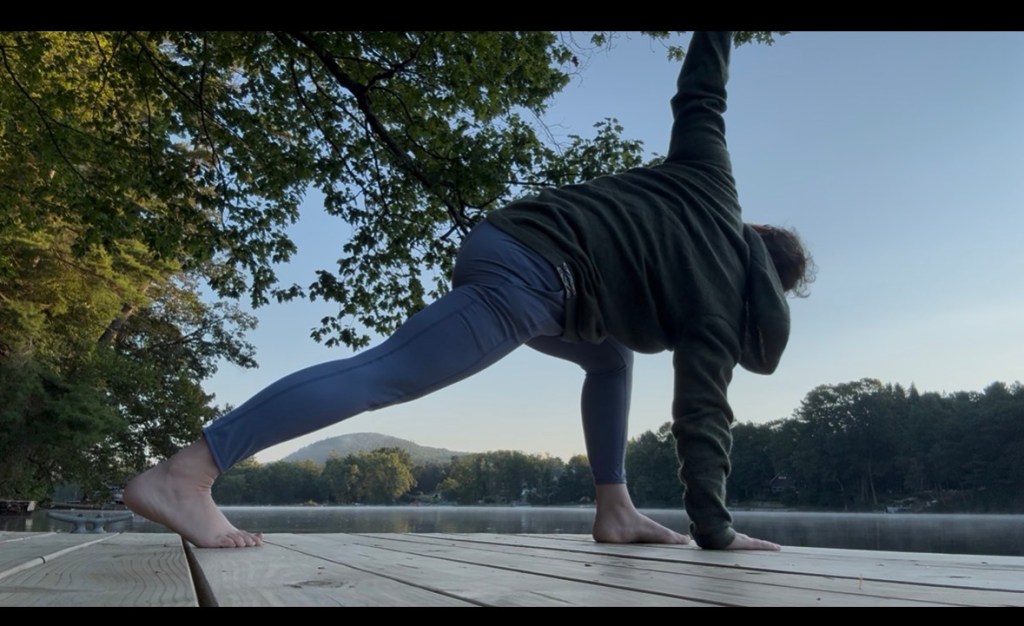
There was a gentle fog still floating on the water and the world was quiet. I padded down to the dock and took it all in. As I sat there I could feel my shoulders lower and loosen and I was able to breathe deeply. I sat there on the dock and drank my coffee and didn’t rush back to my work. I made space for me that morning. Some ducks paddled by enjoying their breakfast of bugs on the water’s surface. The sky slowly lit up more and transitioned from orange and pink to a beautiful bright blue and the fog swept across the water with the slight breeze as it began to burn off for the day. I was reminded that spending time in nature is grounding for me and helps me refocus and relax.

I returned to the cabin a little lighter and as I everyone began waking up and we started our day together I was able to focus on how fortunate I am to have these moments with four generations under one roof. We spent the day sharing the things that my mom and Gram love.

My mom, daughter, niece and I went horseback riding – a favorite activity of my mom’s that she loved sharing with her granddaughters.

We went to a local lake beach after lunch and my mom and grandmother spent some time kayaking along with my niece and daughter. While it takes a little more time to get in and out of the boat and she doesn’t go as far, it is amazing to see Gram paddling alongside my mom at 95!

I drove to the neighboring state at the end of the weekend and delivered my presentation. I returned to school the next day and continued preparations for returning staff.

The to-do list didn’t change because I sat on the end of the dock and enjoyed the view with my coffee but my perspective and attitude toward it did. In taking care of myself, taking some quiet time to recharge and refocus, I was able to be more present with my family and stress less about work.

I’m not telling this story because I think you need to spend a weekend in the woods – but if that’s your jam then I highly recommend it. I am telling you this so you can reflect and think about what you jam is. What makes you feel joy, peace, grounded? For me, it’s nature. I am fortunate to live in an area where a wide variety of natural experiences are within minutes to a few hours drive. I am committed to planning time in nature every week to help me maintain that peace and grounding that it brings.

Maybe you’re thinking there’s no way this can work for you. You have an infant and toddler at home or are caring for an aging parent. Maybe you work two other jobs on top of being an educator so there’s absolutely no time for extended activities or reflection. I get it – our lives are full and busy. I challenge you to then think of what you can do. Start small – try taking a deep breath when you’re standing at the photocopier.

Maybe you hate nature because – you know – bugs! My grounding activity doesn’t have to be your grounding activity. I’m giving you permission to find what works for you. You don’t like nature but you love music? Create a playlist for your drive to work or pop in your earbuds and play your favorite song while you’re putting papers in kids mailboxes.

There are an infinite number of ways, big and small, that you can take care of yourself. Climb a mountain, run a 5K, drink your coffee while it’s still hot, visit a museum or art exhibit, get your nails done, splurge on your new favorite beverage and window shop at that fancy shopping plaza, plan you meals for the week, plan your outfits for the week. Find what works for you and commit to doing it regularly.

What will you do this week to take care of yourself?